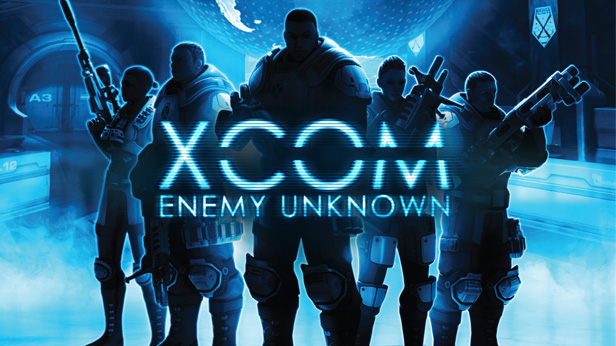
Polygon.com have an excellent article here on the making of the recent strategy game (and my top game of 2012) XCOM. Lead designer Jake Solomon and head of Firaxis Sid Meier talk extensively about the game's nine-year development process, the multiple false starts on the project and how it only came together when they brainstormed ideas for a week whilst playing a board game version of the title.
Lots of great stuff there and confirmation at the end that an XCOM sequel is being looked at.
Showing posts with label xcom. Show all posts
Sunday, 10 February 2013
Monday, 31 December 2012
The Wertzone Awards 2012
Once more unto the breach!
1. Existence by David Brin
David Brin returns after a long absence with a sweeping, state-of-the-nation take on what our lives may be like in the mid-21st Century. Strong characters and a thorough exploration of scientific and technological ideas combine for my strongest book of the year.
2. Dark Eden by Chris Beckett
Beckett's second novel is difficult to describe, being a piece built more around mood and atmosphere than plot. It's the story of the descendants of an ancient starship crash who discover more about the world around them and their true history, and thus about themselves.
3. Kings of Morning by Paul Kearney
Kearney conclude his exploration of Greek and Persian history through the lens of fantasy with aplomb, with flawed characters finding their destinies against the backdrop of war.
4. Railsea by China Mieville
A vast world consisting of oceans of rails, with immense trains ploughing across them. A crazed and whimsical echo of Moby Dick, but with awesome monsters and concepts straight from Mieville's weird imagination. Also incidental winner of the Biggest Mole Monster in SFF Award 2012.
5. Forge of Darkness by Steven Erikson
Erikson steps back from the immense complexity of his Malazan sequence to deliver a (relatively) straightforward prequel. Freed from the weight of backstory, Forge of Darkness is Erikson's finest fantasy novel in a decade.
6. 2312 by Kim Stanley Robinson
Like Brin, Robinson also undertakes a thorough exploration of what humanity may be like in the future, this time 300 years hence. His effort is larger-scaled, taking in the entire Solar system, but fails compared to Brin due to an undercooked political thriller subplot. Still, a visionary work.
7. Red Country by Joe Abercrombie
A bonkers mashup of Al Swearengen, Rockstar Games and Clint Eastwood, this is a fantasy war western on an epic scale. With Abercrombie's trademark black humour and cynical characters, the story is traditionally bloody, brutal and conspicuously lacking in banjos.
8. Sharps by K.J. Parker
Parker's latest novel veers away from her(?) recent novels in being based around an ensemble cast rather than a single individual. It's also hilarious, with the characters being in the middle of a traditional epic fantasy backdrop but without a clue what's going on.
9. The King's Blood by Daniel Abraham
After the good-but-underwhelming Dragon's Path, Abraham's Dagger and the Coin series explodes more readily into life with this second volume. It's a more coherent and focused work than the first novel, consolidating Abraham's position as one of our most promising (relatively) new fantasy writers.
10. The Killing Moon by N.K. Jemisin
Jemisin's epic fantasy by way of Egyptian history and mythology is a bit of a slow-burner, but a smart and intriguing book.
Bubbling under: Blood and Bone by Ian Cameron Esslemont, Great North Road by Peter F. Hamilton, The Dirty Streets of Heaven by Tad Williams, The Twelve by Justin Cronin, Blue Remembered Earth by Alastair Reynolds, Orb Sceptre Throne by Ian Cameron Esslemont, The Iron Wyrm Affair by Lilith Saintcrow, Caliban's War by James S.A. Corey, The Middle Kingdom by David Wingrove, Ice and Fire by David Wingrove, Crown of Embers by Rae Carson.
After a decade being mildly snarky about the Star Wars prequels (among a few other things), Brin returns with his most epic and impressive novel to date. Nicely done.
A book that manages to pack more story, character and thematic exploration into its low page count than some authors manage in entire trilogies. Intelligent and thought-provoking. Next year for the hat-trick?
1. XCOM
Firaxis's resurrection of a twenty-year-old classic is a resounding success. Eminently replayable with a fiendish, "Just one more go!" feel, XCOM is a fitting tribute to the original game and a thoroughly compelling game in its own right.
2. Dishonored
Darkly atmospheric with an unusual setting and a laudable focus on stealth and intelligence over mindless slaughter, playing Dishonored is a rich (but often stressful) experience with a strong element of replayability to it as you attempt to get that perfect 'undetected' pass of a level.
3. Far Cry 3
As bonkers freeform shooters go, they don't get much more bonkers or more successfully freeform than Far Cry 3. A fantastic sense of setting and place with sublime combat overcomes some early makework problems in the early game. Plus the only game on this list where you can blow up a crocodile with a landmine, and is that not what humanity has striven for since first we looked at the stars?
4. The Walking Dead
A zombie game where the zombies are incidental, serving only as the vehicle which fleshes out character and plot. And with this game (based on being halfway through), Telltale have delivered their best characters and most compelling plot so far, not to mention the finest take on The Walking Dead franchise in any medium to date. Full review forthcoming.
5. Alan Wake (PC Edition)
An older, under-appreciated game on console is brought back to life on PC with jaw-dropping graphics and a sense of atmosphere that is staggering, not to mention some hilarious observations on the life of a 'struggling writer'. The PC version includes the two expansions and is an absorbing game.
6. Black Mesa
A bunch of unpaid fans spend eight years updating the greatest first-person shooter of all time (Half-Life) with modern graphics and production values. Frankly better than almost all of the actual original first-person shooters professionally released this year. Worth it just for the Chuckle Brothers reference.
7. Mass Effect 3
It's been a surprisingly thin year for roleplaying games, but Mass Effect 3 nearly makes up for it by itself. With a thorough exploration of consequence and hopelessness, set against a backdrop of smart characterisation and a soundtrack to die for, this could have been a contender for game of the year...at least before a series of titanic logic failures leads to the single most controversial ending of any popular franchise in the last ten years. The Leviathan and 'Extended Cut' DLCs help repair the damage somewhat, but it's not quite enough to overcome the disbelief. Still, the other 95% of the game is awesome.
8. Max Payne 3
Rockstar were always going to have to work hard to convince fans of one of the finest action games of all time that they were suited to take over the franchise, and in isolated, brilliant moments Max Payne 3 succeeds. In others it disappoints, particularly the game's reluctance to actually let you play it (with frequent, unskippable and tedious five-minute cut scenes). The breathless action sequences and stunning soundtrack go some way to repairing the damage, however.
9. Game of Thrones: The RPG
Awful graphics and dubious combat do not for a good RPG make. However, the awesome characters and a series of plot twists that even GRRM may have considered too shocking elevate this game above its problems to become something really interesting. And, based on the dozen hours I've pumped into it so far, frankly better than Dragon Age: Origins.
10. Alan Wake's American Nightmare
Remedy's quasi-sequel to the excellent Alan Wake has some terrific ideas floating below the surface, but ultimately proves too repetitive to withstand comparison with its older, more impressive sibling.
1. Game of Thrones
The second season may have been more disappointing than the first, but it was still the television highlight of the year. Peter Dinklage's performance is even stronger this year than in the first, and more screen time for Charles Dance is always a good thing (though skirting the edges of being too much of a good thing). Some of the more tedious aspects ("Ships! Dragons! Ships! Dragons!") are more than outweighed by the outstanding episode Blackwater.
2. The Walking Dead
The second season of this show was probably best first-experienced on Blu-Ray, with the endless wanderings through the forest looking for missing characters getting a bit old by mid-season. But a renewed focus on character relationships and the deteriorating mental state of the redoubtable Shane (along with the occasional zombie massacre scene) do prove ultimately worthwhile.
3. Merlin
The final season of what started as a light-hearted kid's show proves to be unexpectedly dark, with multiple character deaths and a surprising adherence to the original legend's brutal conclusion. Well-acted and thoroughly enjoyable. If only the whole series had been like this.
4. Doctor Who
A switch to more stand-alone episodes after last year's over-convoluted arc proves to be a success, allowing the show to return to its roots as an enjoyable slice of SF hokum. The arrival of mysterious new companion Clara 'Kenny' Oswald, played with infectious enthusiasm by Jenna-Louise Coleman, has also helped revive the show following the exhaustion of Rory and Amy's storylines.
5. Red Dwarf
Given the damage wreaked on the Red Dwarf name by its seventh and eighth seasons (and the horrendous Back to Earth special of a few years ago, now retconned as the ninth season), expectations were accordingly low for this new season. The cast overcome the issues of age to continue to deliver fine performances with some of the best scripts the show has had in twenty years. Whilst there's still lots of misfires, this latest return for the show is worthwhile.
6. Battlestar Galactica: Blood and Chrome
This pilot for an aborted Battlestar Galactica spin-off tries to make up for the problems of Caprica - being too talky and lacking action - but goes way too far in the opposite direction. Dubious characters and workmanlike performances are held up by some remarkable CGI, but ultimately it's for the best the show wasn't picked up.
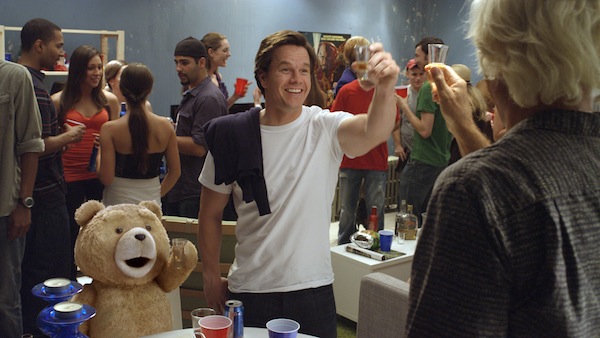
1. Ted
The touching and beautiful story of a young boy and his magical bear who comes to life. Later they take drugs together and meet Sam Jones from the 1980s Flash Gordon movie whilst Patrick Stewart berates Brandon Routh for making Superman Returns in narrative voiceover. Frankly, no other film this year was as much fun.
2. The Dark Knight Rises
Better than The Dark Knight (note: I am well aware that I am the only person on Earth who thinks this), this third movie in the series is a satisfying conclusion to Christopher Nolan's grimdark interpretation of the Dark Knight. As usual, Michael Caine is the best thing in it but is given a run for his money by Anne Hathaway's unexpectedly excellent Catwoman and Tom Hardy's evil Bane (despite sounding like he's sucking in helium whilst at the bottom of well).
3. The Hobbit: An Unexpected Journey
Whilst the overall wisdom of extending a very short novel into a nine-hour trilogy remains to be seen, this first installment works thanks to excellent performances by Martin Freeman, Ian McKellan, Andy Serkis and Richard Armitage and the decision to flesh out the dwarves and their backstory much more than Tolkien did. Also the winner of the Best Hedgehog Scene of 2012 Award.
4. Cabin in the Woods
Joss Whedon and Drew Goddard's metatextual examination of the horror movie genre risks tremendous smugness in its own cleverness but just about gets away with it with a darkly effective premise. Jet-black humour and a ruthlessness in dispatching major characters combine with inventive methods of murder and misdirection to create something very interesting.
5. The Avengers
Joss Whedon almost loses control of this vast behemoth of a movie several times, but just about reigns it in. The movie risks overwhelming the audience with explosions and action, but an undercurrent of humour and some great character moments (mostly involving Mark Ruffalo and Scarlett Johansson) save the film from total Baydom and instead render it nosily enjoyable.
7. The Hunger Games
Suzanne Collins's slightly underwhelming novel is transformed into an enjoyable film, even if it adheres too much to the books in not giving the characters real moral issues to address. Still, great performances from Jennifer Lawrence and Donald Sutherland bode well for the sequels.
7. The Woman in Black
Daniel Radcliffe shakes off the Ghost of Potter to deliver a fine performance in this adaptation of Suzanne Hill's novel. Some standard horror techniques are over-used, but the film delivers an atmospheric experience.
8. Prometheus
Ridley Scott's Alien quasi-prequel features some superb acting, stunning set design and phenomenal set-pieces, but sacrifices too much logic and intelligence to achieve it. A visually impressive cinematic experience, but ultimately a hollow one. However, it does confirm the long-held belief that Everything is Better With Idris Elba.
At the start of the year it seemed very possibly - even likely - that Valve was on the cusp of officially announcing Half-Life 3. That didn't happen, though head of Valve Gabe Newell did confirm that they are at least working on it, and we can expect it to appear some time between now and the heat death of the universe.
Tie.
Best Novels
1. Existence by David Brin
David Brin returns after a long absence with a sweeping, state-of-the-nation take on what our lives may be like in the mid-21st Century. Strong characters and a thorough exploration of scientific and technological ideas combine for my strongest book of the year.
2. Dark Eden by Chris Beckett
Beckett's second novel is difficult to describe, being a piece built more around mood and atmosphere than plot. It's the story of the descendants of an ancient starship crash who discover more about the world around them and their true history, and thus about themselves.
3. Kings of Morning by Paul Kearney
Kearney conclude his exploration of Greek and Persian history through the lens of fantasy with aplomb, with flawed characters finding their destinies against the backdrop of war.
4. Railsea by China Mieville
A vast world consisting of oceans of rails, with immense trains ploughing across them. A crazed and whimsical echo of Moby Dick, but with awesome monsters and concepts straight from Mieville's weird imagination. Also incidental winner of the Biggest Mole Monster in SFF Award 2012.
5. Forge of Darkness by Steven Erikson
Erikson steps back from the immense complexity of his Malazan sequence to deliver a (relatively) straightforward prequel. Freed from the weight of backstory, Forge of Darkness is Erikson's finest fantasy novel in a decade.
6. 2312 by Kim Stanley Robinson
Like Brin, Robinson also undertakes a thorough exploration of what humanity may be like in the future, this time 300 years hence. His effort is larger-scaled, taking in the entire Solar system, but fails compared to Brin due to an undercooked political thriller subplot. Still, a visionary work.
7. Red Country by Joe Abercrombie
A bonkers mashup of Al Swearengen, Rockstar Games and Clint Eastwood, this is a fantasy war western on an epic scale. With Abercrombie's trademark black humour and cynical characters, the story is traditionally bloody, brutal and conspicuously lacking in banjos.
8. Sharps by K.J. Parker
Parker's latest novel veers away from her(?) recent novels in being based around an ensemble cast rather than a single individual. It's also hilarious, with the characters being in the middle of a traditional epic fantasy backdrop but without a clue what's going on.
9. The King's Blood by Daniel Abraham
After the good-but-underwhelming Dragon's Path, Abraham's Dagger and the Coin series explodes more readily into life with this second volume. It's a more coherent and focused work than the first novel, consolidating Abraham's position as one of our most promising (relatively) new fantasy writers.
10. The Killing Moon by N.K. Jemisin
Jemisin's epic fantasy by way of Egyptian history and mythology is a bit of a slow-burner, but a smart and intriguing book.
Bubbling under: Blood and Bone by Ian Cameron Esslemont, Great North Road by Peter F. Hamilton, The Dirty Streets of Heaven by Tad Williams, The Twelve by Justin Cronin, Blue Remembered Earth by Alastair Reynolds, Orb Sceptre Throne by Ian Cameron Esslemont, The Iron Wyrm Affair by Lilith Saintcrow, Caliban's War by James S.A. Corey, The Middle Kingdom by David Wingrove, Ice and Fire by David Wingrove, Crown of Embers by Rae Carson.
The Wertzone SFF Comeback Award 2012
After a decade being mildly snarky about the Star Wars prequels (among a few other things), Brin returns with his most epic and impressive novel to date. Nicely done.
The Wertzone Award for Best Book Read in 2012 Regardless of Release Date
A book that manages to pack more story, character and thematic exploration into its low page count than some authors manage in entire trilogies. Intelligent and thought-provoking. Next year for the hat-trick?
Best Games
1. XCOM
Firaxis's resurrection of a twenty-year-old classic is a resounding success. Eminently replayable with a fiendish, "Just one more go!" feel, XCOM is a fitting tribute to the original game and a thoroughly compelling game in its own right.
2. Dishonored
Darkly atmospheric with an unusual setting and a laudable focus on stealth and intelligence over mindless slaughter, playing Dishonored is a rich (but often stressful) experience with a strong element of replayability to it as you attempt to get that perfect 'undetected' pass of a level.
3. Far Cry 3
As bonkers freeform shooters go, they don't get much more bonkers or more successfully freeform than Far Cry 3. A fantastic sense of setting and place with sublime combat overcomes some early makework problems in the early game. Plus the only game on this list where you can blow up a crocodile with a landmine, and is that not what humanity has striven for since first we looked at the stars?
4. The Walking Dead
A zombie game where the zombies are incidental, serving only as the vehicle which fleshes out character and plot. And with this game (based on being halfway through), Telltale have delivered their best characters and most compelling plot so far, not to mention the finest take on The Walking Dead franchise in any medium to date. Full review forthcoming.
5. Alan Wake (PC Edition)
An older, under-appreciated game on console is brought back to life on PC with jaw-dropping graphics and a sense of atmosphere that is staggering, not to mention some hilarious observations on the life of a 'struggling writer'. The PC version includes the two expansions and is an absorbing game.
6. Black Mesa
A bunch of unpaid fans spend eight years updating the greatest first-person shooter of all time (Half-Life) with modern graphics and production values. Frankly better than almost all of the actual original first-person shooters professionally released this year. Worth it just for the Chuckle Brothers reference.
7. Mass Effect 3
It's been a surprisingly thin year for roleplaying games, but Mass Effect 3 nearly makes up for it by itself. With a thorough exploration of consequence and hopelessness, set against a backdrop of smart characterisation and a soundtrack to die for, this could have been a contender for game of the year...at least before a series of titanic logic failures leads to the single most controversial ending of any popular franchise in the last ten years. The Leviathan and 'Extended Cut' DLCs help repair the damage somewhat, but it's not quite enough to overcome the disbelief. Still, the other 95% of the game is awesome.
8. Max Payne 3
Rockstar were always going to have to work hard to convince fans of one of the finest action games of all time that they were suited to take over the franchise, and in isolated, brilliant moments Max Payne 3 succeeds. In others it disappoints, particularly the game's reluctance to actually let you play it (with frequent, unskippable and tedious five-minute cut scenes). The breathless action sequences and stunning soundtrack go some way to repairing the damage, however.
9. Game of Thrones: The RPG
Awful graphics and dubious combat do not for a good RPG make. However, the awesome characters and a series of plot twists that even GRRM may have considered too shocking elevate this game above its problems to become something really interesting. And, based on the dozen hours I've pumped into it so far, frankly better than Dragon Age: Origins.
10. Alan Wake's American Nightmare
Remedy's quasi-sequel to the excellent Alan Wake has some terrific ideas floating below the surface, but ultimately proves too repetitive to withstand comparison with its older, more impressive sibling.
Best TV Series
1. Game of Thrones
The second season may have been more disappointing than the first, but it was still the television highlight of the year. Peter Dinklage's performance is even stronger this year than in the first, and more screen time for Charles Dance is always a good thing (though skirting the edges of being too much of a good thing). Some of the more tedious aspects ("Ships! Dragons! Ships! Dragons!") are more than outweighed by the outstanding episode Blackwater.
2. The Walking Dead
The second season of this show was probably best first-experienced on Blu-Ray, with the endless wanderings through the forest looking for missing characters getting a bit old by mid-season. But a renewed focus on character relationships and the deteriorating mental state of the redoubtable Shane (along with the occasional zombie massacre scene) do prove ultimately worthwhile.
3. Merlin
The final season of what started as a light-hearted kid's show proves to be unexpectedly dark, with multiple character deaths and a surprising adherence to the original legend's brutal conclusion. Well-acted and thoroughly enjoyable. If only the whole series had been like this.
4. Doctor Who
A switch to more stand-alone episodes after last year's over-convoluted arc proves to be a success, allowing the show to return to its roots as an enjoyable slice of SF hokum. The arrival of mysterious new companion Clara 'Kenny' Oswald, played with infectious enthusiasm by Jenna-Louise Coleman, has also helped revive the show following the exhaustion of Rory and Amy's storylines.
5. Red Dwarf
Given the damage wreaked on the Red Dwarf name by its seventh and eighth seasons (and the horrendous Back to Earth special of a few years ago, now retconned as the ninth season), expectations were accordingly low for this new season. The cast overcome the issues of age to continue to deliver fine performances with some of the best scripts the show has had in twenty years. Whilst there's still lots of misfires, this latest return for the show is worthwhile.
6. Battlestar Galactica: Blood and Chrome
This pilot for an aborted Battlestar Galactica spin-off tries to make up for the problems of Caprica - being too talky and lacking action - but goes way too far in the opposite direction. Dubious characters and workmanlike performances are held up by some remarkable CGI, but ultimately it's for the best the show wasn't picked up.
Best Film
1. Ted
The touching and beautiful story of a young boy and his magical bear who comes to life. Later they take drugs together and meet Sam Jones from the 1980s Flash Gordon movie whilst Patrick Stewart berates Brandon Routh for making Superman Returns in narrative voiceover. Frankly, no other film this year was as much fun.
2. The Dark Knight Rises
Better than The Dark Knight (note: I am well aware that I am the only person on Earth who thinks this), this third movie in the series is a satisfying conclusion to Christopher Nolan's grimdark interpretation of the Dark Knight. As usual, Michael Caine is the best thing in it but is given a run for his money by Anne Hathaway's unexpectedly excellent Catwoman and Tom Hardy's evil Bane (despite sounding like he's sucking in helium whilst at the bottom of well).
3. The Hobbit: An Unexpected Journey
Whilst the overall wisdom of extending a very short novel into a nine-hour trilogy remains to be seen, this first installment works thanks to excellent performances by Martin Freeman, Ian McKellan, Andy Serkis and Richard Armitage and the decision to flesh out the dwarves and their backstory much more than Tolkien did. Also the winner of the Best Hedgehog Scene of 2012 Award.
4. Cabin in the Woods
Joss Whedon and Drew Goddard's metatextual examination of the horror movie genre risks tremendous smugness in its own cleverness but just about gets away with it with a darkly effective premise. Jet-black humour and a ruthlessness in dispatching major characters combine with inventive methods of murder and misdirection to create something very interesting.
5. The Avengers
Joss Whedon almost loses control of this vast behemoth of a movie several times, but just about reigns it in. The movie risks overwhelming the audience with explosions and action, but an undercurrent of humour and some great character moments (mostly involving Mark Ruffalo and Scarlett Johansson) save the film from total Baydom and instead render it nosily enjoyable.
7. The Hunger Games
Suzanne Collins's slightly underwhelming novel is transformed into an enjoyable film, even if it adheres too much to the books in not giving the characters real moral issues to address. Still, great performances from Jennifer Lawrence and Donald Sutherland bode well for the sequels.
7. The Woman in Black
Daniel Radcliffe shakes off the Ghost of Potter to deliver a fine performance in this adaptation of Suzanne Hill's novel. Some standard horror techniques are over-used, but the film delivers an atmospheric experience.
8. Prometheus
Ridley Scott's Alien quasi-prequel features some superb acting, stunning set design and phenomenal set-pieces, but sacrifices too much logic and intelligence to achieve it. A visually impressive cinematic experience, but ultimately a hollow one. However, it does confirm the long-held belief that Everything is Better With Idris Elba.
The Wertzone Missing in Action 2012 Award
At the start of the year it seemed very possibly - even likely - that Valve was on the cusp of officially announcing Half-Life 3. That didn't happen, though head of Valve Gabe Newell did confirm that they are at least working on it, and we can expect it to appear some time between now and the heat death of the universe.
The Wertzone Award for Special Achievements in Seriously, Dude, What the Hell?
Tie.
Wednesday, 31 October 2012
XCOM: Enemy Unknown
2015. The Earth is under attack by waves of UFOs. Alien infiltrators are kidnapping humans to unknown ends, or simply going on the rampage to spread fear and terror. To fight back, the nations of the world have established XCOM, an elite force designed to combat the alien menace. With a fleet of interceptor aircraft and well-trained soldiers at their disposal, the forces of XCOM must discover the enemy's purpose, turn their own weapons against them and win the war...or risk the extinction of humanity.
XCOM: Enemy Unkown is a remake and update of the classic 1994 strategy game, UFO: Enemy Unknown (aka X-COM: UFO Defense in the USA), which in turn was heavily inspired by the 1970 Gerry Anderson TV series UFO. It's a turn-based strategy game in which you command the defence of Earth against an encroaching alien menace. The original game is still held as one of the best strategy games of all time (if not one of the best games of all time) and remaking it is a brave move, but one that Firaxis seem to have pulled off well.
As with the original, the game is divided into two distinct sections. Between missions you hang out at your base, which is initially small but can be expanded to incorporate new laboratories, workshops and other facilities. At your base you can research new technologies, recruit new soldiers and build new equipment for them. You can also upgrade your interceptor aircraft and build and launch new satellites to increase your chances of intercepting the UFOs before they can cause havoc. Increasing your satellite coverage is also important to mollify your financial backers: if a country suffers too much damage in an alien attack or does not feel that XCOM is protecting it, it will withdraw from the XCOM project, delivering a serious blow to your finances. Once you don't have anything more to do, you can hit a button to speed up time, with the game pausing again to let you know about important news (such as research being completed or the completion of a facility's construction) or with news of a fresh alien incursion. Sometimes you have to scramble interceptors to shoot down a UFO, but at other times UFOs will land of their own accord. In either case, once an alien hotspot has been detected, you can send a Skyranger dropship packed with troopers to investigate.
At this point the game moves onto a 3D map depicting the area of operations (sometimes a town packed with civilians, or an empty stretch of countryside, or an alien base).You move your troops around this area in turns. On each turn you can move your troopers, have them fire at any aliens in range or switch to an 'overwatch' mode, which basically stores up their move until the aliens' turn, when they can automatically fire on any aliens who venture into their line of sight. You have to be careful as the aliens often do the same thing, and moving might trigger an alien attack of opportunity on their turn. Combat is undertaken by your troops aiming at the enemy with a percentage chance being shown of how likely the attack will be. Cover is vitally important, with both full and half-cover available to protect combatants, so flanking is critically important, as is the use of heavy weapons that can destroy cover. As the game proceeds your squad size increases (from four to six troops) and you gain access to devastating new weapons, including laser and plasma weapons, as well as psi-powers and expendable robotic drones.
The game itself is fairly straightforward, but what prevents the standard prodcedure (research and build stuff, shoot down UFO, fight on 3D map, rinse and repeat) getting repetitive is the importance placed on your decisions. Do you expand satellite coverage early on, but then lack the funds needed to research new weapons? Can you risk neglecting your interceptors' weapons in favour of upgrading your troopers' rifles? This also extends to your individual (and highly customisable) soldiers, who gain experience and new abilities between missions. Gaining new abilities (such as the ability to use three medikits per mission instead of one) comes at the cost of sacrificing others, and careful decisions have to be made. You can be fairly ruthless, upgrading your troopers' offensive weapons whilst ignoring their defences, since recruiting fresh troops to replace the slaughtered is inexpensive. But experienced combat veterans have powerful abilities, so you may want to pump resources into armour instead. There are numerous approaches you can take to the game, which immensely rewards replayability.
Presentation-wise, the game is slick but not lightweight. The UI is straightforward and instinctively easy to understand, whilst the 3D graphics are more functional than impressive, but with an attractive art style and some cool explosions. Sound effects are good, the alien designs (many of them directly upgraded from the 1994 originals) memorable and interesting, and there's even some pretty good characterisation of your various advisors. One mild misstep is a lack of personality and character amongst your soldiers (since you have full control of their development), which makes some events in the endgame not resonate as strongly as they should.
The game is quite hard, even on the easier difficulty levels, and does not tolerate too many mistakes. Many players, particularly those not familiar with the original, may find themselves having to play through several dummy runs to get acquainted with the concepts and controls before launching a proper campaign (this is not helped by a story-driven tutorial mode which doesn't actually do a good job of giving you the tech you need urgently in the early game period). Still, it's a refreshing change to find a game these days which will punish you but not overwhelm you with frustration to the point where you stop playing. On the contrary, XCOM is compulsive stuff, with the "Just one more turn," mentality resulting in you staying up until ridiculous hours trying to acquire that plasma rifle or bring down that alien base.
On the negative side, the game does lack some of the freedom of the original, such as the ability to exchange equipment in the field and bring a lot more troops to the battlefield, whilst the inability to destroy cover deliberately with normal weapons seems a bit limiting. But these are fairly minor complaints. More serious is a series of crashes I experienced shortly after installation, but these stopped after an hour or so and never reoccurred.
XCOM: Enemy Unknown (****½) is a smart, intelligent and engrossing game, with compelling (but also challenging) gameplay and some fiendish opponents. It's a superb update of a classic game but also a great game in its own right, and a clear front-runner for game of the year. The game is available now on the PC (UK, USA), X-Box 360 (UK, USA) and PlayStation 3 (UK, USA).
XCOM: Enemy Unkown is a remake and update of the classic 1994 strategy game, UFO: Enemy Unknown (aka X-COM: UFO Defense in the USA), which in turn was heavily inspired by the 1970 Gerry Anderson TV series UFO. It's a turn-based strategy game in which you command the defence of Earth against an encroaching alien menace. The original game is still held as one of the best strategy games of all time (if not one of the best games of all time) and remaking it is a brave move, but one that Firaxis seem to have pulled off well.
As with the original, the game is divided into two distinct sections. Between missions you hang out at your base, which is initially small but can be expanded to incorporate new laboratories, workshops and other facilities. At your base you can research new technologies, recruit new soldiers and build new equipment for them. You can also upgrade your interceptor aircraft and build and launch new satellites to increase your chances of intercepting the UFOs before they can cause havoc. Increasing your satellite coverage is also important to mollify your financial backers: if a country suffers too much damage in an alien attack or does not feel that XCOM is protecting it, it will withdraw from the XCOM project, delivering a serious blow to your finances. Once you don't have anything more to do, you can hit a button to speed up time, with the game pausing again to let you know about important news (such as research being completed or the completion of a facility's construction) or with news of a fresh alien incursion. Sometimes you have to scramble interceptors to shoot down a UFO, but at other times UFOs will land of their own accord. In either case, once an alien hotspot has been detected, you can send a Skyranger dropship packed with troopers to investigate.
At this point the game moves onto a 3D map depicting the area of operations (sometimes a town packed with civilians, or an empty stretch of countryside, or an alien base).You move your troops around this area in turns. On each turn you can move your troopers, have them fire at any aliens in range or switch to an 'overwatch' mode, which basically stores up their move until the aliens' turn, when they can automatically fire on any aliens who venture into their line of sight. You have to be careful as the aliens often do the same thing, and moving might trigger an alien attack of opportunity on their turn. Combat is undertaken by your troops aiming at the enemy with a percentage chance being shown of how likely the attack will be. Cover is vitally important, with both full and half-cover available to protect combatants, so flanking is critically important, as is the use of heavy weapons that can destroy cover. As the game proceeds your squad size increases (from four to six troops) and you gain access to devastating new weapons, including laser and plasma weapons, as well as psi-powers and expendable robotic drones.
The game itself is fairly straightforward, but what prevents the standard prodcedure (research and build stuff, shoot down UFO, fight on 3D map, rinse and repeat) getting repetitive is the importance placed on your decisions. Do you expand satellite coverage early on, but then lack the funds needed to research new weapons? Can you risk neglecting your interceptors' weapons in favour of upgrading your troopers' rifles? This also extends to your individual (and highly customisable) soldiers, who gain experience and new abilities between missions. Gaining new abilities (such as the ability to use three medikits per mission instead of one) comes at the cost of sacrificing others, and careful decisions have to be made. You can be fairly ruthless, upgrading your troopers' offensive weapons whilst ignoring their defences, since recruiting fresh troops to replace the slaughtered is inexpensive. But experienced combat veterans have powerful abilities, so you may want to pump resources into armour instead. There are numerous approaches you can take to the game, which immensely rewards replayability.
Presentation-wise, the game is slick but not lightweight. The UI is straightforward and instinctively easy to understand, whilst the 3D graphics are more functional than impressive, but with an attractive art style and some cool explosions. Sound effects are good, the alien designs (many of them directly upgraded from the 1994 originals) memorable and interesting, and there's even some pretty good characterisation of your various advisors. One mild misstep is a lack of personality and character amongst your soldiers (since you have full control of their development), which makes some events in the endgame not resonate as strongly as they should.
The game is quite hard, even on the easier difficulty levels, and does not tolerate too many mistakes. Many players, particularly those not familiar with the original, may find themselves having to play through several dummy runs to get acquainted with the concepts and controls before launching a proper campaign (this is not helped by a story-driven tutorial mode which doesn't actually do a good job of giving you the tech you need urgently in the early game period). Still, it's a refreshing change to find a game these days which will punish you but not overwhelm you with frustration to the point where you stop playing. On the contrary, XCOM is compulsive stuff, with the "Just one more turn," mentality resulting in you staying up until ridiculous hours trying to acquire that plasma rifle or bring down that alien base.
On the negative side, the game does lack some of the freedom of the original, such as the ability to exchange equipment in the field and bring a lot more troops to the battlefield, whilst the inability to destroy cover deliberately with normal weapons seems a bit limiting. But these are fairly minor complaints. More serious is a series of crashes I experienced shortly after installation, but these stopped after an hour or so and never reoccurred.
XCOM: Enemy Unknown (****½) is a smart, intelligent and engrossing game, with compelling (but also challenging) gameplay and some fiendish opponents. It's a superb update of a classic game but also a great game in its own right, and a clear front-runner for game of the year. The game is available now on the PC (UK, USA), X-Box 360 (UK, USA) and PlayStation 3 (UK, USA).
Thursday, 13 September 2012
Four major new old games in the next month
Looking at the more notable new game releases of the next month, it's surprising that four of the highest-profile are in fact remakes or re-releases of older games in new formats.
First up (tomorrow!) is Black Mesa, the free remake of the original Half-Life using the Source Engine. More than six years in the making, the game is looking very impressive indeed. Anyone with Steam installed on their PC will be able to download and play it tomorrow.
That's followed by the release of Baldur's Gate: Enhanced Edition on 18 September. This is an upgraded and updated version of the original game, with significant UI improvements, compatibility with tablets and Macs, and some new content (in the shape of three new NPC companions and a major new dungeon). Baldur's Gate II will follow next year. Both games include the original expansions.
Then, on 28 September, we get Carrier Command: Gaea Mission. From the makers of the ARMA franchise, this is a remake and recreation of the classic 1987 action strategy game, casting the player as the commander of an aircraft carrier playing hide-and-seek with an enemy carrier whilst trying to conquer a chain of islands.
Finally, on 9 October, we get XCOM: Enemy Unknown. A modern remake of UFO: Enemy Unknown (X-COM: UFO Defense in the United States) from the makers of the Civilization series, the game retains the turn-based tactical combat of its forebear, whilst combining it with impressive modern visuals.
First up (tomorrow!) is Black Mesa, the free remake of the original Half-Life using the Source Engine. More than six years in the making, the game is looking very impressive indeed. Anyone with Steam installed on their PC will be able to download and play it tomorrow.
That's followed by the release of Baldur's Gate: Enhanced Edition on 18 September. This is an upgraded and updated version of the original game, with significant UI improvements, compatibility with tablets and Macs, and some new content (in the shape of three new NPC companions and a major new dungeon). Baldur's Gate II will follow next year. Both games include the original expansions.
Then, on 28 September, we get Carrier Command: Gaea Mission. From the makers of the ARMA franchise, this is a remake and recreation of the classic 1987 action strategy game, casting the player as the commander of an aircraft carrier playing hide-and-seek with an enemy carrier whilst trying to conquer a chain of islands.
Finally, on 9 October, we get XCOM: Enemy Unknown. A modern remake of UFO: Enemy Unknown (X-COM: UFO Defense in the United States) from the makers of the Civilization series, the game retains the turn-based tactical combat of its forebear, whilst combining it with impressive modern visuals.
Subscribe to:
Posts (Atom)