Monday, 9 July 2012

Terry Goodkind publicly names and shames ebook pirate

Terry Goodkind has, for reasons unknown but open to speculation, chosen to self-publish his latest Sword of Truth-related novel, The First Confessor: The Legend of Magda Searus (not the sequel to The Omen Machine, which will apparently follow next year from Tor, but a new prequel to the series).


This new book was released as an ebook exclusive several days ago. As an ebook-exclusive, it is little surprise that the book was heavily pirated on release, even after Goodkind posted a message to his website explaining how the economics of ebook publishing worked and politely requested that people refrain from doing so. So, on his Facebook page, Goodkind named and shamed one of the alleged pirates, posting their personal information and several websites where he was active. The alleged pirate apparently withdrew several of his pages and 'attempted' to offer an apology, according to a Goodkind fan monitoring the situation (posting on Westeros.org in this thread). Apparently, this was after several private overtures to the individual were ignored.

An surprising situation. Sharing someone's personal information on the Internet without their permission, even in this situation, is highly dubious (although Goodkind allegedly took legal advice before proceeding with this move). The individual appears to have admitted culpability, which helps, but it is still a bold step to take. At the same time, 'naming and shaming' can be an effective tactic in discouraging piracy. It could also backfire and result in even more piracy and negative publicity for the author. Seeing how this unfolds over the next few weeks should be very interesting.

EDIT: Apparently the original offendor did not and has not offered any kind of apology or restitution to Terry Goodkind or his representatives.

Friday, 6 July 2012

The Guard

Sergeant Gerry Boyle is an atypical Irish garda (policeman): he takes drugs, hires prostitutes and has no problem interfering with a crime scene. He also has an instinctive talent for police work and an impressive amount of luck. When an international drug smuggling operation is discovered operating in the Galway area, Boyle is forced to partner American FBI agent Wendell Everett to bring the smugglers to justice.


On paper, The Guard sounds like a cliche-in-waiting: a chalk and cheese buddy cop movie, in which the straight-laced FBI agent teams up with the slightly crazy Irish policeman and they fail to get along, before circumstances makes them appreciate the other's approach, leading to a happy ending and mutual respect.

This isn't that film. Instead, The Guard is an offbeat, frequently hilarious and well-characterised mini-masterpiece. The normally-excellent Brendan Gleeson is indomitably magnificent in the central role of Boyle, an offbeat and weird policeman who delights in randomly odd acts, whilst Don Cheadle is considerably more restrained (until his frustration explodes into expletive-strewn invective) as Everett. The two actors have a great chemistry which drives the film along. Another important ingredient is the interplay between our three principal villains (Liam Cunningham's Francis, David Wilmot's Liam and Mark Strong's Clive), who break up the monotony between murderous drug jobs by engaging in philosophical quote-offs and debating how best to recruit nameless goon minions.

The film's setting is also key. From the point of view of someone who lived there for a year, Galway and Connemara (a Gaelic-speaking region to the west of the city) are depicted very well. One of director John Michael McDonagh's more amusing quirks is to stage the film like a Western, with Ireland standing in for the American West, complete with saloons and shoot-outs (the film also features one of the better uses of the Chekhov's gun rule). This adds to the film's offbeat atmosphere.

The movie also features some amusing commentary about the cliches of buddy cop films and their predictability, which the film then fails to adhere to. There are also some nice emotional beats (such as the relationship between Boyle and his dying mother, and the complex relationship between Boyle's police sidekick and his wife) but these are handled subtly and not laboured over. The film ends on a note of ambiguity, which the movie then lampoons mercilessly just for the hell of it.

The Guard (*****) is a genuinely funny, outrageous and smart movie. It is available now in the UK (DVD, Blu-Ray) and USA (DVD, Blu-Ray).

Eastbound and Down: Season 2

Having totally messed up his life in Shelby, ex-baseball pitcher Kenny Powers has fled to Mexico. Here he ekes out an existence raising fighting chickens, until he is recognised by the coach of the local struggling baseball team and drawn back into the game. At the same time, he is on a personal quest to track down the enigmatic 'Eduardo Sanchez' and to put his life back together, with the help of his old sidekick Stevie.


For its second season, Eastbound and Down abandons most of the previously-established cast and setting and heads south of the border. Here it's business as usual, as Powers attempts to get himself back to fame and glory but constantly sabotages his prospects with his crass humour, narcissism and total lack of concern for other human beings.

The first season of Eastbound was a success due to the premise and many of the individual gags and ideas being quite funny, with some genuinely solid character development taking place under the avalanche of fairly low-brow humour. The second season at first looks like it's going to continue this trend, with the show's embracing of a new setting (and culture) being a fairly brave move. It would have been easier to have stayed in Shelby and simply churned out six more episodes of the same. However, by a few episodes into this second season, it does feel like the move to Mexico was pointless. The show doesn't make much of its setting (beyond a few lazy gags, though nothing too offensive; HBO has a lot of Mexican viewers) and the structure of the second season is pretty much a retread of the first.

Once again, Kenny is responsible for many of his own problems but, having apparently learned nothing from the events of the first season, enjoys much less of the viewer's sympathy this time around. Again, he is surrounded by friends and allies who want him to succeed, but his constant poor treatment of them and failure to make the most of the good opportunities that come his way makes you wonder why they bother. Crucially, the show is simply not as funny as the first season. Smile-inducing gags are rare, whilst genuine laugh-out loud moments are extremely few and far between.

As before, Danny McBride is watchable and is able to make the viewer cringe in horror at his antics, but is less sympathetic this time around. Most of the cast, new and recurring alike, do good work with limited material, with Don Johnson being particularly amusing in his ability to dish out really terrible advice and make it sound plausible. Efren Ramirez is terribly under-used as Kenny's new neighbour, unfortunately, and oddly the double-act of Deep Roy and Joaquin Cosio, initially established as recurring enemies, disappear quite quickly despite their great comic potential.

This latter issue probably best sums up Eastbound and Down's second season (**½): a great deal of potential, but little of it fulfilled. If you were a huge fan of the first season, there's enough here to just about scrape by, but otherwise a disappointment. The show is available now in the UK (DVD, Blu-Ray) and the USA (DVD, Blu-Ray).

Wednesday, 4 July 2012

FINAL FANTASY VII due for PC re-release

Square Enix have confirmed that they are re-releasing Final Fantasy VII on the PC 'soon'.


Before anyone gets too excited, this is a simple re-issuing of the 1998 PC port of Final Fantasy VII, updated to work with modern PCs. There have been no graphical updates (beyond the fact that the original PC version had higher-resolution 3D models than the PlayStation version anyway). There is also no word on if the original game's two biggest problems - a subpar English translation and unskippable, lengthy cut scenes - have been addressed. According to the website, the character many Europeans and Americans know as 'Aeris' has had her original Japanese name of 'Aerith' reinstated, however (this change did make it into some Western reissues of the original game as well).

There's been rumours for a while that Square was looking at reissuing Final Fantasy VII and VIII (the only two to be ported to the PC, aside from the multiplayer XI and XIV), initially through Steam. The current press release confirms that the re-release of VII will be through Square's own online distribution platform.

Interesting news. If the cut scene problem has been fixed - I have no wish to sit through Sephiroth's Supernova spell (the animation for which lasts for 2 minutes and 20 seconds) twenty times in rapid succession ever again - than this will be worthwhile.

Monday, 2 July 2012

Existence by David Brin

Half a century in the future, the human race has survived several brushes with extinction. True AI has been created but - so far - has been benign and helpful. A terrible nuclear incident has taken place, but humanity has endured. As each bullet is dodged, so mankind's chances of survival to a brighter future appear to be growing...until an ancient alien artefact is recovered from Earth orbit which harbours a terrible truth about the nature of the universe.


After almost twenty years as an important and relatively prolific voice in the hard SF field, David Brin dropped out of the genre in 2001 after the publication of Kil'n People. He's remained active, penning non-fiction and the occasional short story as well as working in comics and doing consulting work, but no more novels have appeared, either stand-alone or in his Uplift universe. Now he's back with Existence, a self-contained, epic SF novel about mankind, our place in the cosmos, why we seem to be alone and where our destiny lies. Certainly if you're going to mount a comeback, there's no better way than doing so with your most ambitious work to date.

Existence revisits the Fermi Paradox, that familiar problem of how, given the sheer size and age of our galaxy, it is implausible that intelligent life has not arisen elsewhere and left visible traces of its presence. Brin's solution to the paradox is both intelligent and, initially, deeply depressing: that the minefield of threats that each race must survive to reach the starts is so extensive that very, very few make it. The novel's opening sections dwell deeply on the threats to mankind's own existence, from climate change and the threat of nuclear war to the possible 'threat' of super-advanced AI. The discovery of the alien 'guidestones' then provides a possible answer, but one which is not to our liking.

The novel unfolds on a large scale, with characters in America, in undersea habitats in the Gulf of Mexico, in floating bases above drowned Pacific island nations and in ruined mansions in Shanghai having their own part to play in the global mystery that unfolds. Our protagonists include a spoiled rich kid who races suborbital rockets for fun, a Chinese sailor who lives on the salvage he dredges out of the sea, a hotshot reporter caught up in a horrendous disaster and a self-obsessed, politically-motivated novelist who slums it as a Hollywood script writer (any similarities to the late Michael Crichton being presumably coincidental). Brin's skills with characterisation - something that set him apart from his fellow 'Killer Bs' back in the day (the Gregs Bear and Benford) - are on full display here as he develops his characters through the unexpected events that engulf them whilst keeping his thematic and philosophical musings integrated with the plot.


In fact, this is what sets Brin's novel apart from Kim Stanley Robinson's recent and equally epic portrait of the future, 2312. Where Robinson seems to have wanted to create a mood piece and then felt compelled to tack on an undercooked thriller plot, Brin keeps his plot, characters and musings all on track simultaneously, developing them all in tandem. This is helped by Brin's prose which has always been above average for hard SF, but in Existence hits new heights. His skill to move between harsh pessimism (the universe is cold and empty and we are a fluke who will soon splutter and die) and tremendous optimism (we can do whatever we want with the universe, if we try) is particularly impressive.

For a novel more than 500 pages long in hardcover, Existence has verve and pace. It's hard SF but done with a light touch and a sense of humour. It's not set in the Uplift universe but Brin drops in parallel-universe versions of some elements of that setting just for fun (those who enjoy Brin's depiction of futuristic dolphins will find some more that on display here). Some of Brin's moments of whimsy backfire - 'Awfulday' seems like an odd nickname for the anniversary of a terrorist attack - and some plot elements feel left behind when several time-jumps take place late in the novel, propelling us decades further into the future. But these are less than niggles.

Existence (****½) moves between being exuberant and fun and serious and contemplative (even maudlin). It asks big questions and proposes a variety of intelligent answers but doesn't resort to over-simplicity. It's definitely as good a comeback as we could have hoped for from Brin. The novel is available now in the UK and USA.

ROME II confirmed and looking impressive


Following last week's leaks, the Creative Assembly have confirmed that their next game will be Total War: Rome II.


Details on the game are still somewhat sparse, but we know that the game will feature some serious graphical improvements over the previous titles in the series and, after the tight focus of Shogun 2, will be again opting for a sprawling, epic scale. This time around the game will cover all of Europe, extending further east than the original Rome: Total War map, although it will again feature many of the same factions. Whether the Roman faction will be split between three families as before has not yet been confirmed. Creative Assembly have said that the game is their biggest project to date, requiring a budget 40% larger than their biggest previous game.


The battle engine, although based on the same Warscape technology that every Total War title since Empire has employed, has received some serious upgrades. Combined-arms land-and-sea battles have been retained, but now expanded in scope for assaults on harbour cities. The above screenshot depicts the Roman fleet assaulting Carthage's harbour, whilst below shows ground forces attacking the city centre. Cities are now absolutely massive, with numerous 'points of control' that have to be secured to ensure the city's surrender. The old trick of racing to the city square and holding it for a couple of minutes is no longer possible, in a sop to both realism and the computer's AI (which used to either make the city square near-impregnable or simply abandon it for no good reason).


The Creative Assembly are also expanding the game's graphics and animation, with soldiers in units whose morale is slipping now reacting more noticeably, perhaps panicking or showing fear on their faces. Another major change is the addition of characters, people like Scipio or Cicero whose presence will affect the way affairs unfold (and perhaps make assassinations more necessary to proceed).

Total War: Rome II will be released for the PC in the latter half of 2013, er, sorry, MMXIII.

New cover art

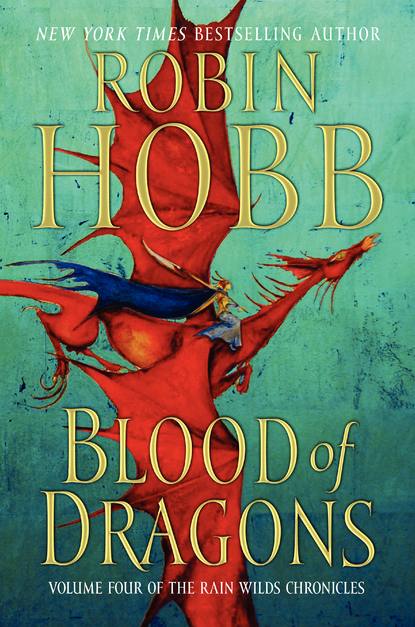
Some upcoming cover art, courtesy of Jussi at Westeros.org once more:

First up, the American cover for Blood of Dragons, the fourth volume in The Rain Wild Chronicles by Robin Hobb. This book is due for publication in the UK and USA in April 2013:


Next up is the American cover for Great North Road, Peter F. Hamilton's new massive SF epic. This book will be out in the USA in December this year (and September in the UK):


The final UK cover art for Iain M. Banks's The Hydrogen Sonata, the latest excursion to The Culture. This book will be out in the UK and USA in September this year:


Rounding things off is the UK artwork for The Dirty Streets of Heaven, the first in Tad Williams's new urban fantasy series. This book will be out in both the UK and USA in September as well: